

Export Market Demand Highlights of Dual-rail Slides
Export Market Demand Highlights of Dual-rail Slides
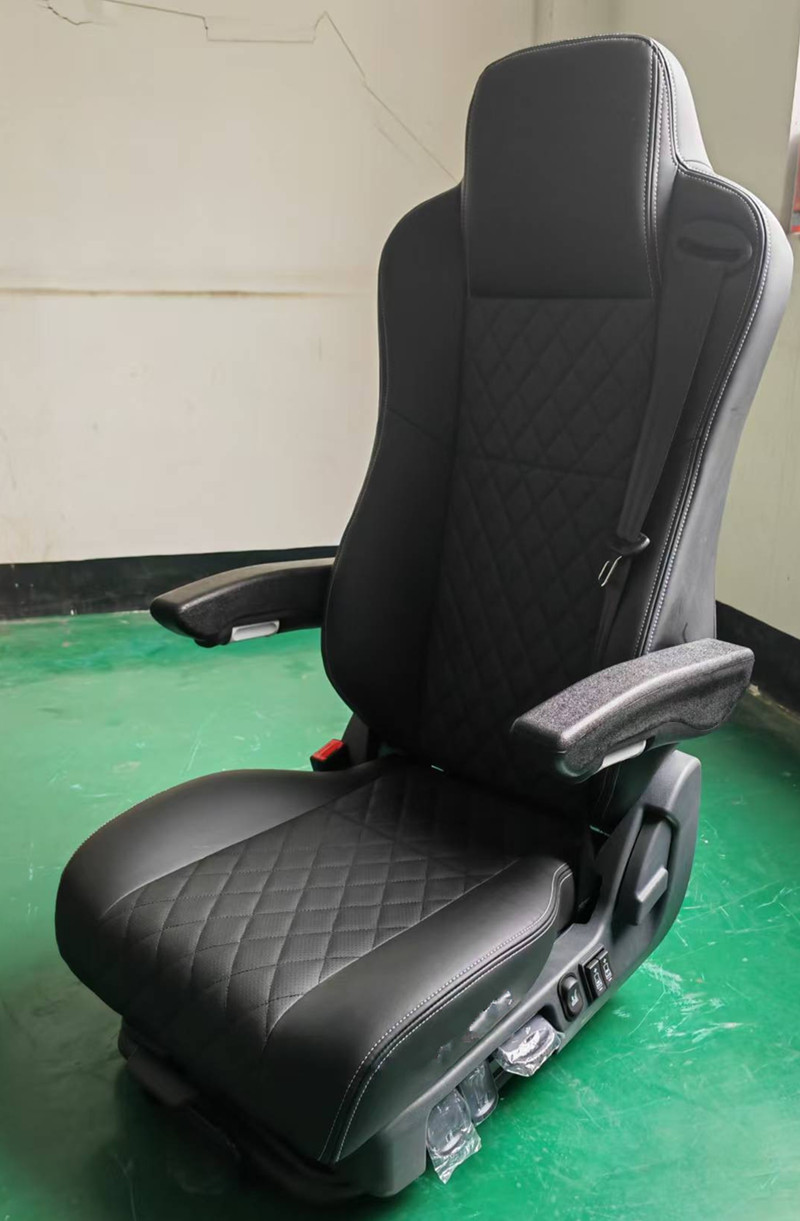
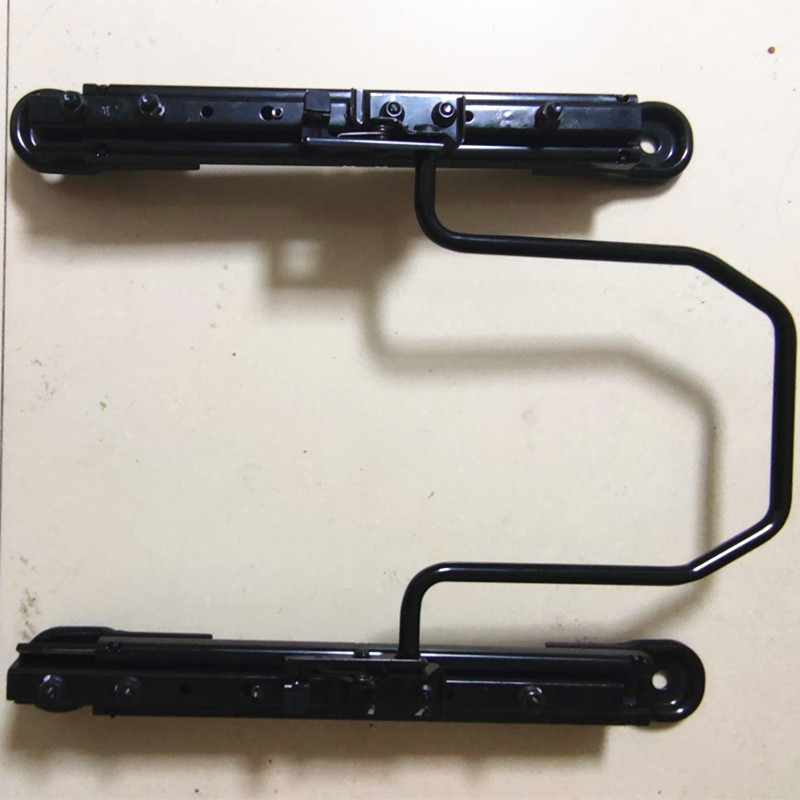
With core advantages of high stability, strong load-bearing capacity, and compatibility with mainstream vehicle models, dual-rail slides have become the standard configuration in the global mid-to-high-end automotive market. The following highlights focus on export business application scenarios (market analysis, product promotion, customer development) and balance professionalism with practicality:
|
Demand Highlight Dimension |
Specific Performance |
Target Markets/Customer Groups |
Commercial Application Value (Export Perspective) |
|
1. Supporting Demand for Mid-to-high-end Vehicles |
- Compatible with mainstream sedans, SUVs, and MPVs (e.g., Toyota Corolla, Volkswagen Tiguan, Honda Odyssey), serving as a standard component for global automakers; - Load-bearing capacity: 300-400kg; Adjustment stroke: 150-300mm, meeting core adjustment needs of driver/front passenger seats, with added value 50%+ higher than single-rail slides. |
Mainstream automakers in Europe and America (Germany, the U.S., France) (e.g., Volkswagen, General Motors, Peugeot); Local and overseas factories of Japanese and South Korean automakers (e.g., Toyota, Hyundai); Overseas supply chains of Chinese new energy vehicle (NEV) manufacturers (e.g., BYD, NIO, Xpeng). |
- Access the supporting systems of global mainstream automakers and establish long-term stable supply relationships; - Improve profit margins through high added value, with export quotations of $25-$50 per set (up to $80+ for electric versions). |
|
2. Adaptability Demand for New Energy Vehicles |
- Electric dual-rail slides support stepless adjustment, mute control (≤45dB), and seat memory functions, perfectly matching the intelligent configuration of NEVs; - Aluminum alloy versions are 30% lighter than steel counterparts, aligning with the core demand for NEV lightweighting (to reduce energy consumption). |
NEV markets in Europe (Norway, the Netherlands, Germany) (e.g., Tesla, BMW i Series, Volkswagen ID Series); NEV manufacturers and modification plants in North America (the U.S., Canada); High-end NEV supporting markets in Southeast Asia (Singapore, Thailand). |
- Achieve differentiated competition by focusing on the NEV track and seize high-growth market share; - Electric versions offer significant premium space, becoming a core profit growth driver for exports. |
|
3. Compliance Certification Adaptation Demand |
- Compliant with stringent global safety standards (ECE R14 Seat Safety Certification, FMVSS 207 U.S. Seat System Standard) and environmental standards (REACH/RoHS); - Torsional stiffness ≥1500N·m/rad, fatigue life ≥100,000 adjustments, and passing collision safety tests. |
Markets with strict compliance requirements (e.g., Europe, America, Japan); Procurement systems of global Tier 1 automotive parts suppliers (e.g., Bosch, Magna, Faurecia); Supporting markets for high-end commercial vehicles (e.g., Mercedes-Benz Actros, Volvo FH). |
- Break through technical barriers with compliance advantages to enter high-threshold markets; - Become a secondary supplier to Tier 1 suppliers and expand high-end supply chain channels. |
|
4. Incremental Demand in After-sales and Modification Markets |
- Meet maintenance and replacement needs for old mid-to-high-end models (e.g., BMW 3 Series, classic Audi A4) as an alternative to original parts; - Support personalized modifications (e.g., extended seat adjustment stroke, reinforced locking mechanism), adapting to the North American modified car market and European RV market. |
Automotive repair chains and modification parts distributors in North America (the U.S., Canada); RV modification plants and high-end used car renovators in Europe (Germany, Italy); After-sales parts markets for luxury cars in the Middle East (UAE, Saudi Arabia). |
- Expand non-supporting channels to cover stable increments in the after-sales market; - Enhance product added value through customized modification services, with quotations adjustable upward by 30%-50% per set. |
|
5. Differentiated Demand in Regional Markets |
- European market prefers mute electric slides and environmentally friendly materials (aluminum alloy/high-strength steel), emphasizing comfort and sustainability; - North American market highlights load-bearing capacity (≥350kg) and collision safety, adapting to large SUVs and pickup trucks; - Japanese and South Korean markets pursue precision manufacturing (adjustment error ≤0.5mm) and miniaturized design, compatible with compact sedans. |
High-end passenger car markets in Europe (Germany, France, Italy); SUV/pickup supporting and after-sales markets in North America (the U.S., Canada); Local automakers in Japan/South Korea and their radiated markets in Southeast Asia. |
- Optimize product parameters to match regional market preferences; - Reduce competitive pressure and enhance customer stickiness through differentiated products. |
Core Export Market Demand Highlights (Ranked by Priority)
1. European Market (Germany, France, Italy, Spain) — Core Profit Market
- Demand Core: Focus on supporting mid-to-high-end passenger cars and NEVs, with extremely high requirements for product performance, compliance, and intelligence. It is the highest-value export market for dual-rail slides.
- Highlight Details:
1. High electrification penetration: Over 60% of demand is concentrated in electric dual-rail slides, supporting models such as BMW iX, Mercedes-Benz EQ Series, and Volkswagen ID.3, with strict requirements for mute performance (≤40dB) and precise positioning (error ±1mm);
2. Preference for environmentally friendly materials: Aluminum alloy slides account for over 40% of the market. Material test reports (complying with REACH heavy metal-free requirements) are required, and lightweighting and environmental friendliness are key procurement decision factors;
3. Bulk supporting attributes: Automakers (e.g., Volkswagen, Peugeot, Renault) adopt an "annual bidding + long-term supply" model, with single orders ≥5,000 sets, and IATF 16949 automotive quality management system certification is mandatory;
4. Incremental modification market: Booming demand for RV (e.g., Mercedes-Benz Sprinter modified vehicles) and commercial vehicle modifications, with a preference for dual-rail slides with customizable adjustment strokes (250-350mm), offering 20% higher profit margins than the supporting market.
2. North American Market (U.S., Canada, Mexico) — Bulk Demand Market
- Demand Core: Balanced focus on SUV/pickup/NEV supporting and after-sales markets, with large demand scale and prominent requirements for load-bearing capacity and safety.
- Highlight Details:
1. Load-bearing capacity requirements: Adapt to large pickups such as Ford F-150 and Chevrolet Silverado, requiring load-bearing capacity ≥350kg and impact resistance tests compliant with FMVSS 207;
2. Localized production adaptation: As a North American automotive industry cluster, Mexico-based automakers (e.g., GM and Ford’s Mexican factories) prefer "localized supply." Logistics costs can be reduced through overseas warehouses or local assembly;
3. Mature after-sales market: Stable replacement demand for mid-to-high-end models (e.g., BMW X5, Audi Q7), with flexible procurement volumes from traders (500-2,000 sets per order), adapting to a mixed supply model of "bulk + small orders";
4. NEV growth: Rapidly growing demand from NEV manufacturers such as Tesla and Rivian. Electric dual-rail slides must support seat memory and automatic adjustment functions, compatible with on-board ECUs.
3. Japanese, South Korean, and Southeast Asian High-end Markets (Japan, South Korea, Singapore, Thailand) — Precision Adaptation Market
- Demand Core: Focus on supporting compact sedans and high-end NEVs, emphasizing precision manufacturing and miniaturized design. It is an important export destination for technical products.
- Highlight Details:
1. Precision manufacturing requirements: Adjustment error ≤0.5mm, locking mechanism response time ≤0.3 seconds, adapting to space constraints of compact sedans such as Toyota Corolla and Honda Civic;
2. Access to Japanese/South Korean supply chains: As a secondary supplier to automakers such as Toyota and Hyundai, strict sample testing (fatigue life ≥150,000 cycles) is required. Once admitted to the supply chain, cooperation stability is high;
3. High-end growth in Southeast Asia: Growing demand in Thailand and Malaysia’s high-end vehicle markets (local assembly of Mercedes-Benz and BMW), with dual-rail slides gradually replacing single-rail slides as the standard configuration for mid-to-high-end models;
4. Humidity-heat resistance optimization: Targeting Southeast Asia’s climate, surface anti-rust processes need to be enhanced (salt spray test ≥500 hours), and electric versions require IP65 waterproof and dustproof sealing design.
Practical Suggestions for Export Business
- Product Positioning: Focus on "high stability + intelligence + compliance adaptation." Electric versions target the European and American NEV markets, steel versions focus on North American SUV/pickup supporting, and aluminum alloy versions enter the supply chain of European high-end models;
- Customer Development:
- Automaker supporting: Connect with overseas procurement departments of global mainstream automakers and Tier 1 parts suppliers (e.g., Magna, Faurecia), providing sample testing + certification packages;
- After-sales/modification: Settle on B2B platforms such as Alibaba International and Made-in-China, highlighting "original part replacement + customization" advantages to connect with overseas repair chains and modifiers;
- Promotion Focus:
- Product manuals: Clearly mark core parameters including "load-bearing capacity, adjustment stroke, compliance certifications (ECE/FMVSS/REACH), materials, and compatible models";
- Marketing materials: Display collision test videos, mute test data, and NEV adaptation cases to strengthen technical advantages;
- Compliance and Cost Control:
- Complete ECE R14, FMVSS 207, and IATF 16949 certifications in advance to avoid customs clearance delays;
- Reduce costs of steel versions through large-scale production, and improve profit margins of electric versions by localizing core components (e.g., motors, gears);
- Regional Adaptation Strategies:
- Europe: Optimize electrification, lightweighting, and mute performance; provide multilingual technical documents;
- North America: Enhance load-bearing capacity and safety; connect with Mexico’s localized logistics system;
- Southeast Asia: Improve humidity-heat resistance; launch miniaturized versions adapted to compact models.
Contact information:
Cangzhou Huayang Car Accessory Co.,Ltd.
WhatsApp/WeChat/Kakao talk/MB:+86 15030709203
Tel: +86 15030709203; +86 18733045230
QQ: 2761741790
Email: sales@hycaraccessory.com
ceo@hycaraccessory.com
sales@yiduspace.com
2761741790@qq.com
Website: www.hycaraccessory.com