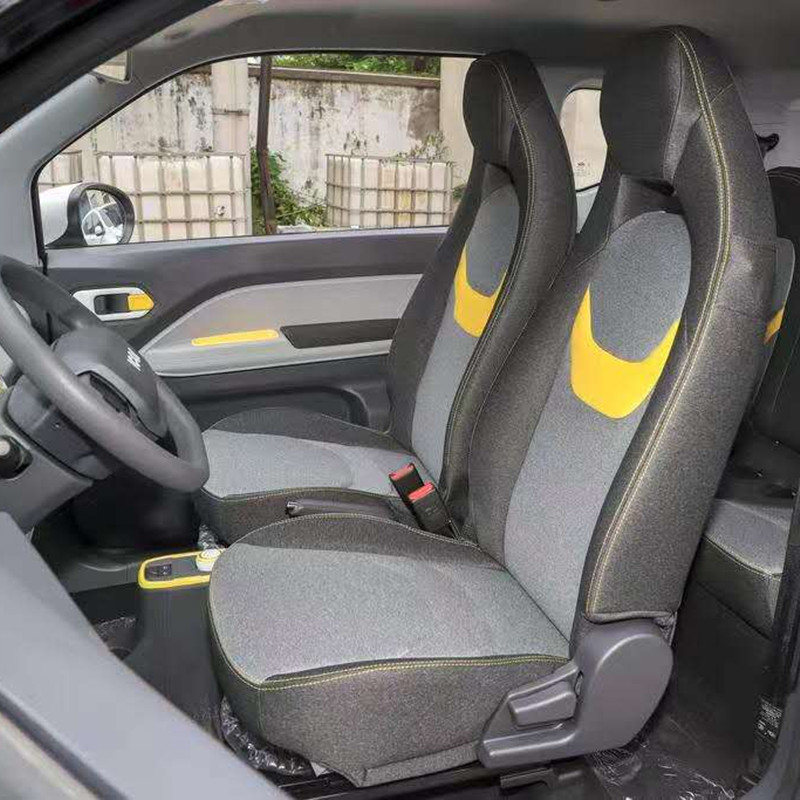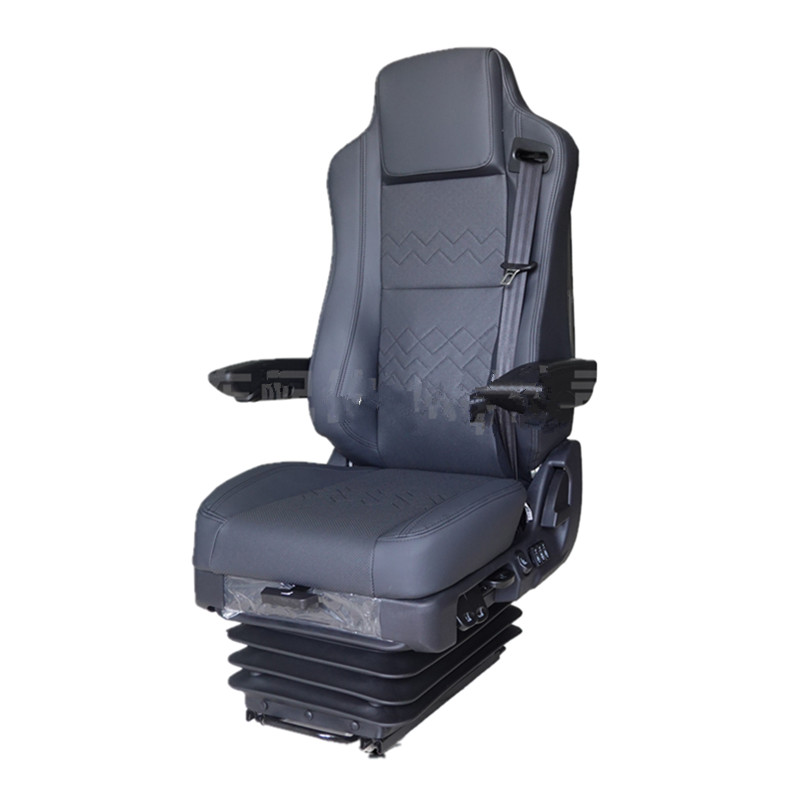


How to Improve the Safety of Seats in Low-Speed Electric Vehicles
How to Improve the Safety of Seats in Low-Speed Electric Vehicles
How to Improve the Safety of Seats in Low-Speed Electric Vehicles
Seats in low-speed electric vehicles (elderly mobility scooters, micro four-wheel electric vehicles) have inherently weak safety foundations. To enhance their safety, the core approach is to first establish life-saving baseline protections, then reinforce the structure, and finally standardize usage. Measures are implemented from three aspects: hardware modification, usage habits, and complete vehicle matching. The following specific methods cover both operable low-cost solutions and advanced reinforcement options:
I. First, Equip Core Life-Saving Configurations: From "No Protection" to "Basic Protection"
This is the top-priority, most cost-effective step. Targeting the most fatal safety weaknesses of low-speed Electric Vehicle Seats, priority is given to supplementing restraint and support devices, which is low-cost and delivers quick results.
Mandatorily Equip Compliant Seatbelts and Reject 2-Point Lap Belts
- For vehicles without seatbelts or only equipped with 2-point lap belts, national standard 3-point seatbelts must be installed (covering the driver's seat, front passenger seat, and rear seats). 3-point seatbelts secure both the chest and waist simultaneously, dispersing impact force during collisions—far superior to 2-point belts (which only constrict the waist and easily cause abdominal injuries).
- Seatbelt anchor points must not only be screwed onto the thin sheet metal of the seat. They should be fixed to robust load-bearing structures such as the vehicle frame, door pillars, and floor longitudinal beams via extended bolts and reinforced steel plates, preventing seatbelt failure when the seat deforms.
- Select compliant seatbelts with pretensioner and force-limiting functions (available in auto parts markets). These tighten instantly during collisions while limiting tension to avoid rib injuries.
Install/Upgrade Compliant Headrests to Prevent Cervical Whiplash
- For vehicles without headrests, or with excessively short/soft foam decorative headrests, replace them with adjustable metal-bracket headrests. The headrest height must be level with the top of the head/above the ears, fitting the occipital bone. The bracket should use steel pipes with a diameter of ≥10mm to prevent bending easily.
- The connection between the headrest and seat back must be firm, using bolt-and-nut locking instead of simple snaps, to prevent the headrest from detaching in rear-end collisions.
Complete Basic Protection for Rear Seats
- For rear integrated seats without independent support, install simple independent headrests to avoid unsupported heads for rear passengers.
- Never modify the rear seats into "overload seats"; maintain the original passenger capacity. Meanwhile, prohibit children from riding. If children must be transported, never hold them in arms. A universal child seat fixing bracket (adapted to simple seatbelt fixation) can be installed in the rear, rejecting unprotected riding.
II. Reinforce the Seat Structure: From "Prone to Breakage and Detachment" to "Impact Resistance"
Targeting weak core structures such as the seat frame, anchor points, and slide rails, hardware modifications are used to improve strength and prevent seat deformation or detachment during collisions.
Strengthen the Seat Frame to Prevent Bending and Breaking
- For seats with original thin sheet metal/simple steel pipe frames, install reinforcing ribs (2-3mm thick steel plates or square steel pipes) inside the seat back and cushion. Fix them by welding/bolting longitudinally and transversely along the frame to form a "grid" support structure, enhancing bending resistance.
- Apply anti-rust treatment to welding points (brush anti-rust paint, spray plastic) to avoid later rust and breakage. If welding is not feasible, a auto repair shop can fix reinforcing parts with bolts, achieving basic reinforcement without welding.
- Replace inferior foam fillers with high-density resilient sponge (density ≥35kg/m³). It absorbs energy during collisions, prevents the human body from directly hitting the hard frame after collapse, and improves comfort simultaneously.
Upgrade Seat Anchor Points to Eliminate Total Detachment
- For seats originally fixed only with self-tapping screws/small screws, replace all with Grade 8.8 high-strength bolts (diameter ≥8mm), matched with flat washers, spring washers, and lock nuts to prevent loosening.
- For thin sheet metal at fixed positions, install thickened reinforced steel plates (thickness ≥3mm) to expand the stress area and prevent screws from tearing the thin sheet metal. Bolts must penetrate the floor and be locked with nuts under the vehicle body, not just screwed onto the surface sheet metal.
- Inspect Seat Slide Rails. If the rails are flimsy with large gaps, replace them with thickened steel rails and upgrade the locking buckles (use metal buckles, reject plastic buckles), ensuring the seat does not slide back and forth and the backrest lock does not fail during sudden braking or bumps.
Strengthen Backrest Strength to Prevent Rear Passengers from Crushing the Front
- For backrests that easily collapse or move backward when pressed firmly, install transverse steel pipe supports inside the backrest to connect the left and right frames, enhancing impact resistance. This prevents rear passengers from "crushing" the front seats in rear-end collisions, causing crush injuries to front and rear occupants.
- Reinforce rear seat backs as well by thickening the backrest steel plates to prevent the rear backrest from being punctured when the front seats move backward.
III. Optimize Complete Vehicle Matching: Seat Safety Requires Full Vehicle Protection
Seat safety in low-speed electric vehicles is not isolated. Without full vehicle protection, modifying only the seat has limited effect. Basic safety configurations must be supplemented simultaneously to form a protection system.
Install Basic Anti-Collision Structures
- For vehicles without anti-collision beams, install simple steel anti-collision beams (square steel pipes with a thickness ≥2mm) at the front and rear, matched with small energy-absorbing boxes. In minor collisions, the anti-collision beams absorb energy first, reducing the impact force on the seats.
- Install anti-collision steel pipes inside the doors to prevent door deformation during side collisions, which would squeeze the seats and occupants.
Prohibit Illegal Modifications and Maintain the Original Seat Layout
- Do not privately cut or modify the seat frame, arbitrarily widen or lengthen the seat, or remove the original support structure of the seat, to avoid damaging seat strength.
- Do not modify the rear seats into a "flat bed"; retain the backrest angle locking function to prevent the seat from suddenly reclining while driving.
Upgrade the Flame Retardancy of Seat Fabrics
- For vehicles with poor flame-retardant original fabrics, replace them with flame-retardant fabrics/artificial leather, or spray flame retardants on the original fabrics. This prevents the seat fabric from fueling fires and releasing toxic fumes in collision-induced fires, reducing secondary injuries.