

How Safe Are the Seats in Low-Speed Electric Vehicles
How Safe Are the Seats in Low-Speed Electric Vehicles?
The safety of seats in low-speed electric vehicles (commonly referred to as low-speed EVs, elderly scooters, and micro four-wheel EVs) is far inferior to that of conventional passenger cars overall. It is directly linked to the vehicle's safety rating, compliance status, and adherence to national standards. This article clarifies seat safety from four perspectives: structure, regulations, risk points, and purchasing recommendations.
I. First, Clarify: Low-Speed EVs ≠ Standard Passenger Cars
Most domestic "low-speed electric vehicles" are classified as non-road motor vehicles or micro electric cars. Many are not listed in the Announcement of Road Motor Vehicle Manufacturers and Products, and are not designed to meet passenger car safety standards—with seats being just one component.
Seats in standard passenger cars must comply with:
- GB 15083 Strength Requirements and Test Methods for Vehicle Seats, Seat Anchorages and Head Restraints
- Mandatory requirements for front/side collisions, rear-end collisions, seat anchorage strength, and anti-whiplash head restraints.
However, the vast majority of low-cost low-speed EVs produce seats without adhering to these standards, which is the root cause of safety hazards.
II. Major Safety Risks of Low-Speed EV Seats
1. Insufficient Seat Frame Strength
Many low-cost models use thin sheet metal, simple stamped parts, or even poorly welded steel pipes/thin steel plates without reinforcing ribs.
During sudden braking, rear-end collisions, or minor impacts:
- The seat frame easily deforms, bends, or breaks, causing occupants to be thrown forward or sideways.
- Insufficient backrest strength means rear passengers can crush the front seat in a rear-end collision, trapping front occupants.
2. Substandard Seat Anchorage Strength
Standard vehicle seat anchorages must withstand enormous tension (thousands of Newtons). Low-speed EVs often use only a few ordinary self-tapping screws and thin sheet metal for fixation.
In a collision or sudden stop:
- The entire seat may detach, slide rails dislodge, or screws snap, sending occupants flying with the seat—an extremely high risk.
3. Missing or Ineffective Head Restraints
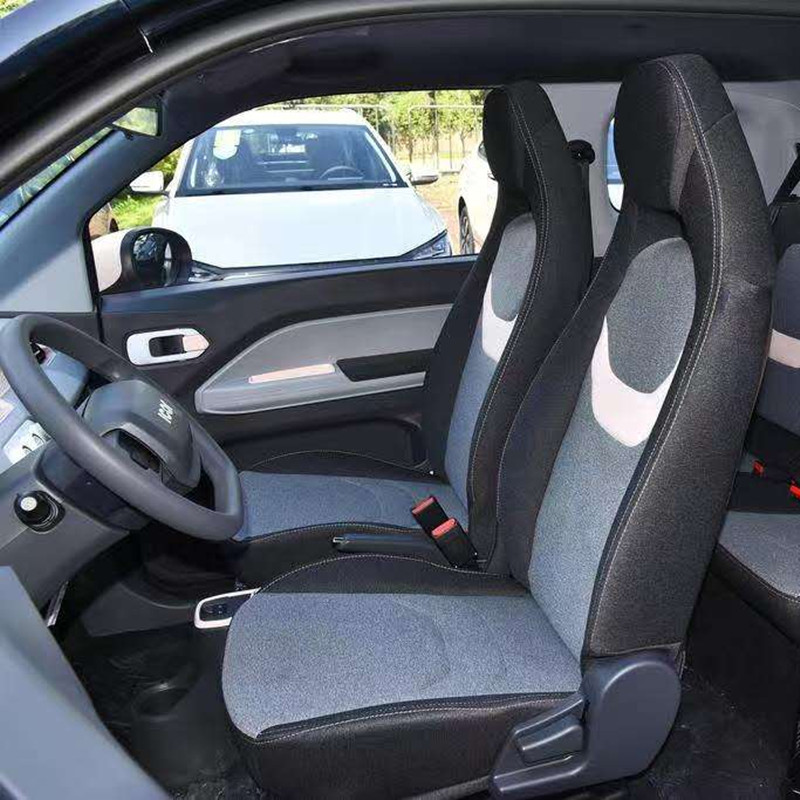
Many low-speed EVs have no head restraints, extremely short/unadjustable ones, or ultra-soft foam serving only as decoration.
In rear-end collisions:
- The head snaps back violently, causing cervical whiplash, fractures, or high paraplegia.
- Standard head restraints have strict height, hardness, and energy absorption requirements, which low-speed EVs almost never meet.
4. Unreliable Seat Slide Rails and Locking Mechanisms
- Excessive slide rail clearance and flimsy locking clips cause seats to slide forward/backward automatically during sudden braking or bumps.
- Backrest angle locks fail under force, causing the seat to collapse flat, leaving occupants unsupported and at high risk of secondary collisions.
5. Mismatched Seatbelts Rendered Useless
- Many low-speed EVs are equipped only with 2-point lap belts, or no seatbelts at all, with weak anchorages.
- If 3-point seatbelts are anchored to weak seats, seat deformation during a collision renders the belt ineffective.
- Some models have non-standard belt length, positioning, or retractors, causing chest constriction, failure to lock, or loss of retraction.
6. Padding & Upholstery Prioritize "Softness" Over Energy Absorption
- Excessive focus on "softness" uses low-density, low-resilience foam with poor energy absorption. It collapses severely in collisions, exposing occupants to direct impact with the rigid frame.
- Upholstery is often ordinary fabric/artificial leather with poor wear and flame resistance, fueling fires and releasing toxic fumes if ignited.
Related News

Related News