
Key Issues to Note in the Installation and Maintenance of Automotive Seat Rails
2.3 Installation Recommendations from
the End-User's Perspective
For end-users who choose to install seat
rails by themselves, basic mechanical knowledge and safety awareness are
required, and installation must be carried out in strict accordance with
operating specifications.
Pre-installation preparation is the
foundation for successful installation. Users need to prepare necessary tools,
including suitable wrenches, screwdrivers, jacks, etc., and ensure that the
vehicle is parked in a safe and flat place with the handbrake pulled and
warning signs set up. When selecting rail products, choose reliable quality
products that match the vehicle model, and avoid using inferior or mismatched
components. At the same time, carefully read the product manual to understand
installation requirements and precautions.
Precautions during installation include
multiple key links. First, when installing the rails, ensure that the direction
of the two rails is correct—usually, the rails should be installed inward, and
the screw holes should be aligned with the original vehicle's holes. When
tightening the screws, first hand-tighten them, then gradually tighten them,
but do not over-tighten at the beginning to facilitate subsequent adjustments.
Second, special attention should be paid to the handling of wire harnesses during
installation—relevant electrical connections must be disconnected first to
avoid short circuits or equipment damage during installation. For parts that
need to be cut or modified, operate cautiously to ensure that the structural
strength and safety of the vehicle are not affected.
Safety operation specifications are
guidelines that end-users must strictly follow. Throughout the installation
process, users must pay attention to the following safety matters: disconnect
the vehicle power supply before installation to avoid electric shock risks;
when lifting the seat, use appropriate supporting tools to prevent injury from
seat falling; when using electric tools, ensure that the tools are in good
condition to avoid personal injury caused by tool failure; avoid damaging other
vehicle components during installation, especially the interior and electrical
system; after installation, conduct a comprehensive safety inspection to ensure
that the seat is firmly installed and functions normally.
Commissioning and testing requirements are
important links to verify installation quality. After installation, users need
to conduct the following tests: first, check if the forward-backward adjustment
function of the seat is normal, whether the sliding is smooth, and whether
there is jamming or abnormal noise; second, check if the locking function of
the seat is reliable and whether it is stable after being locked in different
positions; then, check if the seat belt anchorages are firm and whether the ISOFIX
interface works normally; finally, conduct necessary electrical function tests
to ensure that electric adjustment, seat memory and other functions are normal.
If any abnormalities are found during the test, stop using immediately and seek
professional maintenance services.
2.4 Installation Differences Between
Different Types of Rails
Different types of seat rails have
significant differences in installation methods and technical requirements,
requiring corresponding installation strategies.
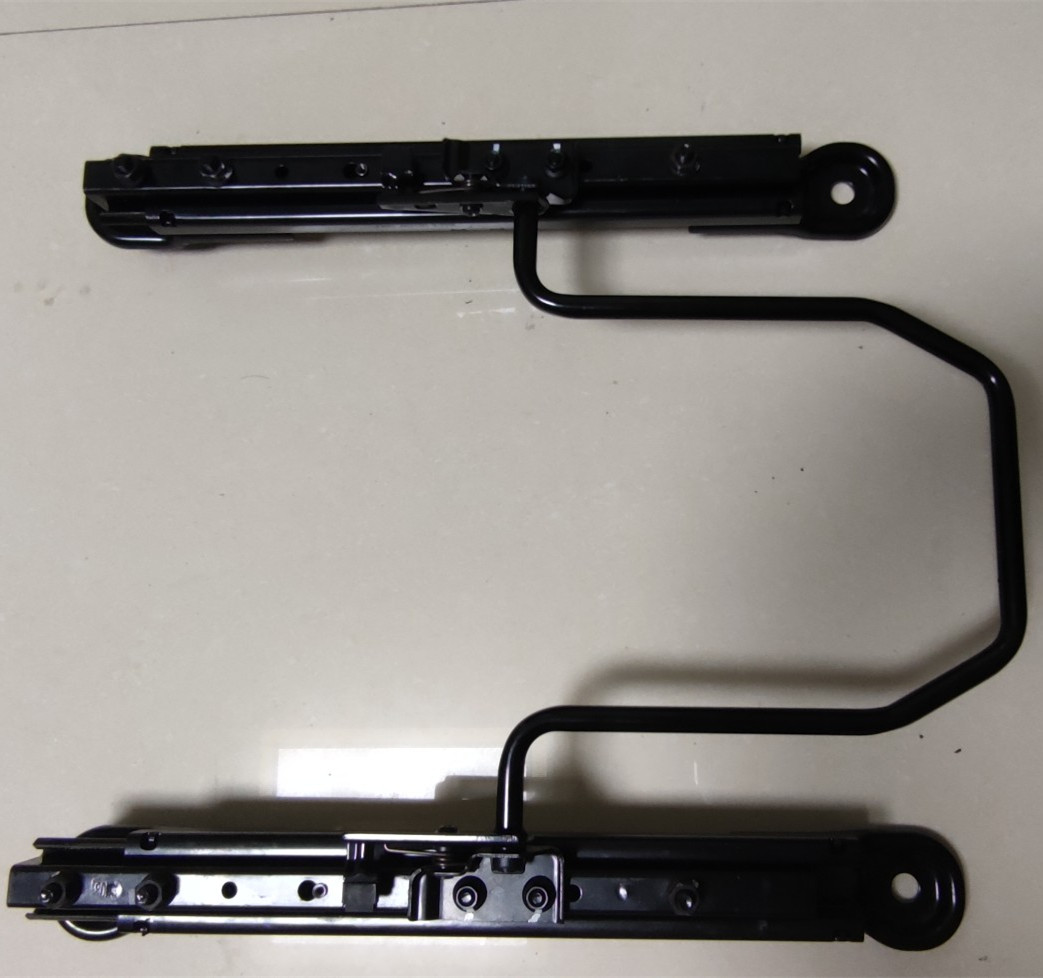
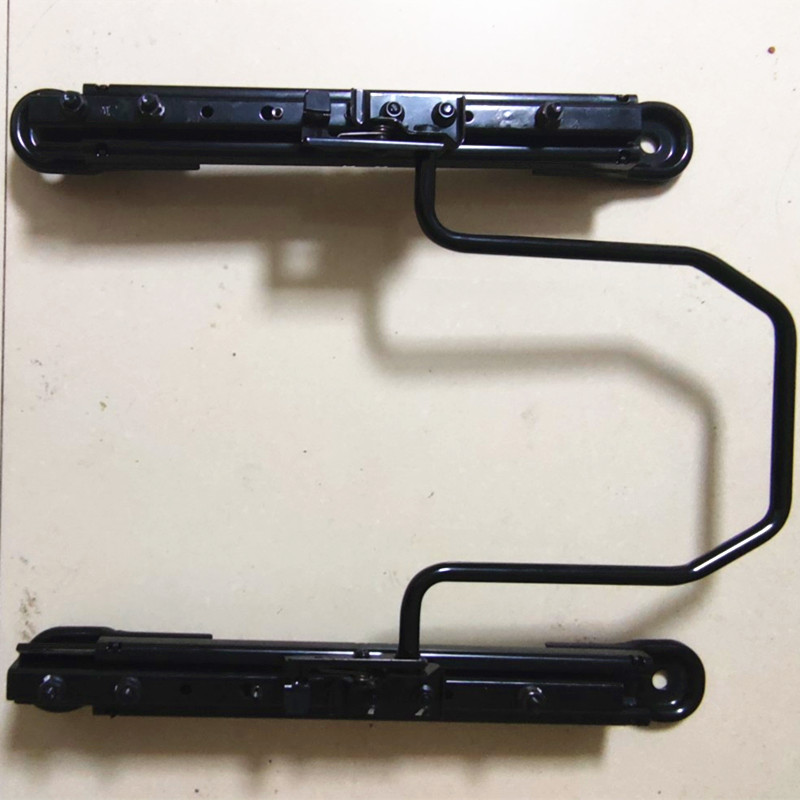
The installation characteristics of manual
rails are mainly reflected in the complexity of the mechanical structure.
Manual rails usually include multiple components such as upper rails, lower
rails, locking mechanisms, balls, and cages. During installation, it is
necessary to ensure the correct assembly and lubrication of these components.
When installing the locking mechanism, special attention should be paid to the
position of the unlock lever and the adjustment of the unlocking force to
ensure that the unlocking force is within the standard range of 15-55N. The
installation of manual rails also needs to focus on synchronization issues—must
ensure that the left and right rails can be locked and unlocked simultaneously
to avoid safety risks caused by asynchrony.
The installation complexity of electric
rails mainly lies in the integration of the electrical system. In addition to
mechanical components, electric rails also include electrical components such
as motors, control modules, sensors, and wire harnesses. During installation,
special attention should be paid to the correctness of electrical connections
to avoid equipment damage or functional abnormalities caused by wrong wiring.
The motors of electric rails usually adopt permanent magnet DC motors, which have
the characteristics of strong power and overload protection. During
installation, ensure that the motor is firmly fixed and has good heat
dissipation. For electric rails with memory functions, initialization settings
and functional tests are also required.
The installation challenge of long-stroke
rails mainly lies in precision control and stability assurance. Due to their
long length, long-stroke rails are prone to deformation or distortion during
installation, affecting sliding precision and stability. When installing
long-stroke rails, special installation tools and positioning devices need to
be used to ensure that the straightness and flatness of the rails meet the
requirements. At the same time, due to the large weight of long-stroke rails,
appropriate hoisting equipment should be adopted to avoid rail deformation or
personal injury during installation. The design of the guide system for
long-stroke rails is also more complex, requiring uniform clearance between the
slider and the rail to avoid jamming.
The professional installation of
special-type rails requires corresponding technical capabilities and
experience. The installation of pneumatic rails requires professional pneumatic
tools and pressure testing equipment to ensure the sealing performance and
pressure adjustment function of the pneumatic system. The installation of
hydraulic rails is more complex, requiring professional hydraulic system
knowledge and installation experience to ensure correct connection of hydraulic
pipelines without leakage, and normal operation of hydraulic pumps and control
valves. For intelligent rail systems integrating multiple functions, software
configuration and system commissioning are also required during installation to
ensure the coordinated operation of various functions.
III. Key Points for Seat Rail
Maintenance
3.1 Manufacturer's Maintenance Strategy
Manufacturers need to consider the
maintainability of products during the design and production phases, and
formulate scientific maintenance strategies to ensure that products maintain
optimal performance throughout their life cycle.
Product lifecycle management is the core of
the manufacturer's maintenance strategy. The product lifecycle can be divided
into six phases: concept, planning, development, verification, mass production,
and obsolescence, with corresponding maintenance focuses for each phase. In the
concept phase, determine the maintenance characteristic requirements of the
product according to market demand and technological development trends; in the
planning phase, formulate detailed maintenance plans and technical specifications;
in the development phase, optimize the maintainability design of the product
through technical means such as CAE simulation; in the verification phase,
verify the effectiveness of the maintenance strategy through durability
testing; in the mass production phase, establish a sound quality control system
to ensure the consistency of product maintenance characteristics; in the
obsolescence phase, formulate reasonable spare parts supply and recycling
plans.
The formulation of preventive maintenance
plans needs to be based on the usage characteristics and failure mode analysis
of the product. According to industry standards, the durability requirement of
seat rails is that under a load of 80kg on the seat, the forward-backward
reciprocating sliding should be more than 15,000 times without defects such as
roller/ball falling off, part deformation, or mechanism failure. Manufacturers
should formulate corresponding preventive maintenance plans based on this standard,
including lubrication cycles, inspection items, and replacement standards. For
vehicles used in harsh environments, the maintenance cycle should be shortened.
Material aging monitoring is an important
means to ensure the long-term performance of products. Seat rails are mainly
made of high-strength steel, which will experience aging phenomena such as
wear, corrosion, and fatigue during long-term use. Manufacturers need to
establish a material performance monitoring system to timely detect material
aging problems and formulate corresponding countermeasures through regular
material testing and performance evaluation. For key components such as locking
mechanisms and balls, clear replacement standards and cycles should be
formulated to ensure the safety and reliability of products.
The application of intelligent maintenance
technology is becoming an industry development trend. Modern seat rails are
increasingly integrated with sensors and intelligent control systems, which can
real-time monitor the working status of the rails, predict potential faults,
and issue timely alarms. Manufacturers can collect product operation data
through remote monitoring systems, analyze usage patterns and fault trends, and
provide users with predictive maintenance recommendations. This maintenance technology
based on big data and artificial intelligence can significantly improve
maintenance efficiency, reduce maintenance costs, and reduce the occurrence of
unexpected faults.
3.2 Maintenance Specifications for
Maintenance Service Providers
As professional maintenance service
providers, maintenance service providers need to establish standardized
maintenance processes and quality control systems to ensure the professionalism
and reliability of maintenance services.
Standardization of regular inspection items
is the foundation for ensuring maintenance quality. Maintenance service
providers should establish a comprehensive inspection checklist, including:
inspection of the tightness of connectors and fixing bolts to ensure no
looseness or damage; inspection of the cleanliness of the rail surface to
remove dust and debris; inspection of lubrication status to ensure sufficient
and non-deteriorated grease; evaluation of the wear degree of mechanical
components, especially key components such as balls and cages; inspection of
the electrical system, including the working status of motors, sensors, and
control modules; functional testing to ensure normal seat adjustment function
without jamming or abnormal noise.
Lubrication and maintenance specifications
are the key to extending the service life of rails. Maintenance service
providers should formulate corresponding lubrication plans according to the
requirements of different types of rails. For manual rails, special rail grease
should be used, and grease with excessively high viscosity such as engine oil
or butter should be avoided, as these greases are prone to adsorbing dust and
affecting sliding performance. The lubrication cycle is generally recommended
to be once every 6 months to 1 year, but for vehicles used in harsh
environments, it should be shortened to once every 3 months. During
lubrication, first clean the dust and old grease on the rail surface, then
evenly apply new grease, and finally repeatedly adjust the seat to ensure full
distribution of the grease.
The formulation of component replacement
standards needs to be based on professional technical evaluation. Maintenance
service providers should establish scientific component replacement decision
standards, including: rails must be replaced when severe deformation or cracks
occur; locking mechanisms should be considered for replacement when the
unlocking force exceeds the standard range (15-55N) and cannot be adjusted;
balls or cages must be replaced when obvious wear or damage occurs; motors or
control modules of electric rails should be replaced when faulty and
irreparable; rails should be considered for replacement when the sliding
resistance exceeds the standard range and cannot be resolved through
lubrication and other measures. When replacing components, original factory or
certified accessories should be used to ensure quality meets requirements.
Standardization of fault diagnosis and
handling processes is the key to improving maintenance efficiency. Maintenance
service providers should establish a systematic fault diagnosis process,
including: detailed recording and analysis of fault phenomena; determination of
possible fault causes based on fault phenomena; systematic testing with
professional tools to determine the exact location of the fault; formulation of
targeted repair plans; implementation of repairs and functional verification;
recording of maintenance processes and results to establish maintenance files.
For complex electrical faults, professional diagnostic equipment should be used
to read fault codes, and targeted maintenance should be performed according to
code prompts.
3.3 Daily Maintenance for End-Users
As direct users of seat rails, end-users
mastering correct daily maintenance methods is crucial to extending product
service life and ensuring use safety.
Daily cleaning and maintenance are the
simplest and most important maintenance work. Users should regularly use a
vacuum cleaner to clean sand and dust in the rail gaps to avoid particles
entering the rail and causing wear or jamming. During cleaning, use a soft
cloth dipped in neutral detergent to wipe the rail surface; for stubborn
stains, a soft brush can be used for auxiliary cleaning, but sharp tools should
be avoided to scratch the rail surface. After cleaning, thoroughly dry the
surface to prevent rail rust. For electric rails, special attention should also
be paid to the cleaning of electrical interfaces to avoid short circuits caused
by moisture intrusion.
The ability to identify abnormal conditions
is a basic skill that users must master. Users should learn to identify
abnormal states of seat rails, including: obvious jamming or increased
resistance during sliding; abnormal noise during adjustment; looseness or
displacement of the seat in the locked state; failure or slow response of
electric adjustment functions; significant increase or decrease in the
operating force of the unlock lever; rust or obvious wear on the rail surface.
When these abnormal conditions are found, timely inspection and handling should
be conducted to avoid further deterioration of the problem.
Simple troubleshooting is maintenance work
that users can handle by themselves. For common minor faults, users can try the
following solutions: if the rail is jammed, it is usually caused by dust or
lack of lubrication—clean the rail surface first, then apply an appropriate
amount of grease; if unlocking is difficult, spray rust remover on the rail and
gently shake the seat to help the rust remover penetrate; if the seat is loose,
check if the fixing screws are loose and tighten them in a timely manner; if the
electric function fails, first check if the fuse is blown. When performing
these operations, users should pay attention to safety and seek professional
help when necessary.
Grasping the maintenance cycle is crucial
to ensuring the long-term reliable operation of the seat system. Users should
formulate a reasonable maintenance plan according to the vehicle's usage
environment and frequency. Generally, it is recommended to conduct a
comprehensive inspection and lubrication of seat rails every 6 months; for
vehicles often used in dusty or humid environments, it should be shortened to
once every 3 months; if abnormalities are found in the rail, inspection and
maintenance should be conducted immediately. At the same time, users should
also establish maintenance records, recording the time, content, and found
problems of each maintenance to track the product's usage status and
maintenance effect.
3.4 Maintenance Differences Between
Different Types of Rails
Due to differences in structural
characteristics and working principles, different types of seat rails have
significant differences in maintenance methods and requirements.
The maintenance focus of manual rails is on
the maintenance and lubrication of mechanical components. The main maintenance
items for manual rails include: regular inspection of the working status of the
locking mechanism to ensure normal unlocking and locking functions; inspection
of the wear degree of balls and cages, and timely replacement of damaged
components; regular cleaning and lubrication of the rail surface with special
rail grease; inspection of the operating force of the unlock lever to ensure it
is within the standard range of 15-55N; inspection of the loose clearance of
the rail to ensure the forward-backward clearance does not exceed 0.35mm, and
the left-right and up-down clearances do not exceed 0.50mm. The maintenance of
manual rails is relatively simple, but special attention should be paid to the
wear and lubrication status of mechanical components.
The maintenance complexity of electric
rails is mainly reflected in the maintenance of the electrical system. In
addition to the same mechanical maintenance as manual rails, electric rails
also require focused maintenance of the electrical system, including: regular
inspection of the motor's working status, testing the motor's voltage and
resistance; inspection of the functions of control modules and sensors to
ensure normal signal transmission; inspection of the reliability of wire
harness connections to avoid poor contact; cleaning of electrical interfaces to
prevent oxidation and corrosion; regular updating of control software to ensure
the integrity of system functions. The maintenance of electric rails requires
professional electrical knowledge and testing tools, and is recommended to be
performed by professional maintenance personnel.
The maintenance challenge of long-stroke
rails lies in their special structural characteristics. Due to their long
length, special attention should be paid to the following issues during
maintenance: since the rail is long, inspection should be conducted in sections
to ensure each part is fully inspected; lubrication of long-stroke rails is
more difficult, requiring special lubrication tools to ensure uniform
distribution of grease; due to the higher precision requirements of long-stroke
rails, special attention should be paid to avoiding deformation during
maintenance; the support structure of long-stroke rails is more complex,
requiring inspection of the status of all support points; during maintenance,
special attention should be paid to preventing excessive bending or distortion
of the rail.
The professional maintenance of
special-type rails requires targeted methods. For pneumatic rails, the
maintenance focus is on the sealing performance and pressure adjustment
function of the pneumatic system—regularly check the status of the airbag to ensure
no leakage, and inspect the working status of the pressure regulating valve;
for hydraulic rails, the maintenance focus is on the cleanliness of the
hydraulic system and the replacement of hydraulic oil—regularly check the
connection of hydraulic pipelines to ensure no leakage, and inspect the quality
and liquid level of hydraulic oil; for gas spring-type rails, focus on checking
the sealing performance and elastic coefficient of the gas spring to ensure the
supporting force meets requirements. The maintenance of these special-type
rails usually requires professional technology and equipment, and is
recommended to be performed by trained professional personnel.