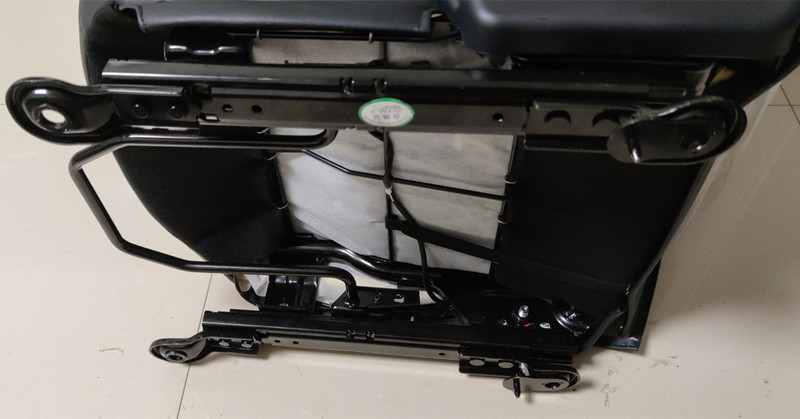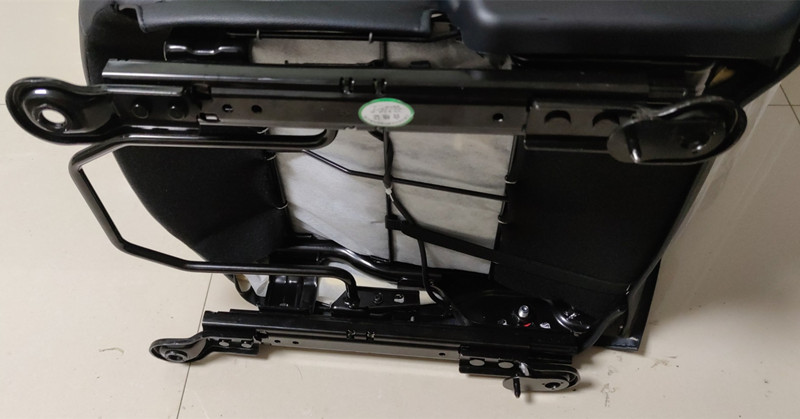

Key Issues to Note in the Installation and Maintenance of Automotive Seat Rails
Key Issues to Note in the Installation
and Maintenance of Automotive Seat Rails
As a core component connecting the seat and
the vehicle body, automotive seat rails are responsible for crucial functions
such as seat position adjustment, safe fixation, and load-bearing support. With
the continuous development of automotive technology, the types of seat rails
have become increasingly diversified—from traditional manual adjustment to
intelligent electric adjustment, and from simple forward-backward sliding to
complex multi-directional adjustment—their technical complexity and functional
requirements have been continuously elevated. Therefore, mastering correct installation
and maintenance methods is essential to ensure the safe and reliable operation
of the seat system. This article starts with the classification characteristics
of seat rails, comprehensively analyzes the key points in the installation and
maintenance process for different vehicle types and user entities, and provides
systematic technical guidance for relevant personnel.
I. Classification and Technical
Characteristics of Automotive Seat Rails
1.1 Classification by Drive Mode
Automotive seat rails are mainly classified
into two basic types by drive mode: manual rails and electric
rails, which differ significantly in structural principles, operation
methods, and application scenarios.
Manual rails require releasing the locking
mechanism by pulling the unlock lever manually, then pushing the seat to
achieve forward-backward sliding adjustment. Based on the position of the
unlock lever, manual rails are further divided into built-in unlock
manual rails and external unlock manual rails. A typical
example of built-in unlock manual rails is Faurecia's 4CB built-in rail, whose
unlocking mechanism is integrated inside the rail for a cleaner appearance;
external unlock manual rails, such as CRH's manual rails, have the unlock lever
located outside the rail for more intuitive and convenient operation. The main
advantages of manual rails lie in their simple structure, low cost, and high
reliability, making them suitable for cost-sensitive economy vehicles. Their
technical parameters usually include: unlocking force of 15-55N, sliding
resistance of 30-225N (when bearing 75kg), and locking force ≥17,000N.
Electric rails realize automatic
forward-backward seat adjustment through motor drive without manual operation.
According to the motor installation position, electric rails are divided
into mid-mounted electric rails and front-mounted
electric rails. Mid-mounted electric rails have the motor installed between
the two rails, driving both sides simultaneously through a transmission
mechanism; front-mounted electric rails have the motor installed at the front
end of the rail, featuring a more compact structure. The core advantages of
electric rails are convenient operation and high adjustment precision. Some
high-end products also integrate memory functions, which can store
multiple seat position settings for one-key reset. Electric rails adopt DC
motor-driven gear transmission systems, equipped with position sensors and
control modules to achieve precise position and speed control.
1.2 Classification by Cross-Sectional
Shape
Seat rails can be classified into various
types by cross-sectional shape, such as C-type rails, T-type
rails, and M-type rails (also known as W-type rails). Different
cross-sectional shapes determine the load-bearing capacity, sliding
characteristics, and installation method of the rails.
C-type rails have a C-shaped cross-section
and are one of the most common rail types. Their structural feature is that
both sides of the rail are bent upward to form a slot structure, which can
effectively prevent the slider from falling off with high safety. C-type rails
are suitable for most passenger cars and light commercial vehicles, offering
the advantages of simple structure and moderate cost.
T-type rails have a T-shaped cross-section,
characterized by a wider top and narrower bottom, forming a stable support
structure. T-type rails have strong load-bearing capacity and can withstand
larger vertical loads, making them commonly used in commercial vehicle seats
requiring high load-bearing capacity. The technical parameters of T-type rails
usually include: inner and outer rails made of SAPH440 high-strength steel,
outer rail thickness of 2.5mm, inner rail thickness of 2.0mm, sliding force of
20-65N per rail, and 20-110N for the assembly.
M-type rails (W-type rails) have a W-shaped
or M-shaped cross-section. This design provides a larger contact area and
better stability. M-type rails are usually used in high-end models or special
application scenarios with high stability requirements. Although their
manufacturing cost is relatively high, they can deliver superior performance.
1.3 Classification by Function and
Stroke
In addition to the above classification
methods, seat rails can also be classified by function and stroke. By function,
they are divided into longitudinal adjustment rails and lateral
adjustment rails. Lateral rails are mainly used in MPV models, such as
Honda Odyssey and Elysion, enabling left-right lateral movement of the seat to
provide passengers with more seating space and flexibility.
By stroke, they are divided into standard
rails and long-stroke rails (stroke > 300mm).
Long-stroke rails are mainly used in models requiring a larger adjustment
range. For example, the front passenger seat of SAIC Maxus G70 is equipped with
an ultra-long rail of nearly 2 meters, with a total forward-backward movement
distance of 980mm, and also realizes the unique one-key 180° rotation function
in its class. The technical challenge of long-stroke rails lies in precision
control—the longer the rail, the more difficult it is to control precision, and
jamming is prone to occur during adjustment. Therefore, they have higher
requirements for manufacturing processes and materials.
1.4 Special-Type Rails
In addition to traditional mechanical
rails, there are also special-type rail systems mainly used in specific vehicle
types or functional requirements.
Pneumatic seat rails are mainly applied in
commercial vehicles such as trucks, realizing suspended support of the seat
through airbag or air cushion systems. This type of rail system can
automatically adjust according to the driver's weight and road conditions,
featuring excellent shock absorption and buffering performance, which can
significantly improve the comfort of long-distance driving. The working
principle of pneumatic rails is to use the elastic characteristics of
compressed air to change the height and hardness of the seat by adjusting the
air pressure in the airbag, thereby adapting to different driving environments
and driver needs.
Hydraulic rail systems adopt hydraulic
drive and control, mainly used in special vehicles requiring precise control
and high load-bearing capacity. Hydraulic rail systems are usually equipped
with hydraulic pumps, hydraulic cylinders, control valves and other components,
enabling smooth motion control and precise position positioning. Some high-end
hydraulic rails also integrate hydraulic dampers, such as Stabilus' Stab-O-Shoc
series, which can provide comfortable buffering for the rapid movement of seats
and backrests.
Gas spring-type rails use gas struts as
supporting and adjusting components. According to the working medium and
functional characteristics, they can be divided into hydraulic gas springs,
pneumatic gas springs, free-type gas springs, self-locking gas springs, and
stay gas springs. The main advantages of gas spring-type rails are stable
lifting and supporting force, as well as good sealing performance and
durability. Among them, hydraulic gas springs use gear oil as the working
medium and are recyclable; pneumatic gas springs use compressed gas and are
non-recyclable.
II. Key Points for Seat Rail
Installation
2.1 Installation Specifications from the
Manufacturer's Perspective
From the manufacturer's perspective, the
installation of seat rails must comply with strict technical specifications and
quality control standards to ensure the safe and reliable operation of the
product throughout its life cycle.
Installation considerations during the
design phase are the foundation for ensuring correct rail installation. When
designing rails, manufacturers need to fully consider compatibility with
different vehicle models, including standardized design of installation
interfaces, precise layout of mounting holes, and matching with the vehicle
body structure. According to industry standards, the design of rails must meet
the requirements of GB 15083-2019 "Strength Requirements and Test
Methods for Automotive Seats, Seat Anchorages and Head Restraints",
which specifies the strength requirements for seats of M-category and
N-category vehicles, including the strength of seat assemblies, seat backrests,
adjustment devices and other important components.
In terms of standardized installation
processes, manufacturers usually adopt automated assembly lines to ensure
consistent installation quality. A typical rail assembly process includes:
first, placing the upper and lower rails in designated positions and clamping
them with control equipment; then, applying oil to the inner sides of the inner
and outer rails; next, rotating the rail to the cage press-fitting station
through a rotating mechanism; manually installing the rail base assembly onto
the rail; then placing the retainer, cylindrical rollers, and cage assembly
onto the rail base; finally, completing the press-fitting action with an
automatic press-fitting mechanism. The entire assembly process requires strict
control of oil application amount, press-fitting force, and assembly precision
to ensure that the sliding force and forward-backward stroke of the rail meet
customer requirements.
Quality control points run through the
entire installation process. Manufacturers need to establish a sound quality
inspection system, including raw material inspection, in-process quality
control, and final product inspection. In terms of raw materials, the rail body
and locking mechanism should be made of high-strength automotive steel plates
with a tensile strength of generally over 500MPa, and some even reaching
900MPa, with a thickness of 1.50-2.00mm. The steel strength should be uniform,
which is reflected in the stable strength of the steel coil at the head,
middle, tail, and in the longitudinal, transverse, and 45-degree directions to
ensure the stability of rail forming and subsequent welding and assembly
quality. In terms of in-process control, 100% inspection of key processes is
required, especially sliding force testing, which must ensure that the sliding
force of the rail is smooth throughout the stroke without peak phenomena. In
terms of final inspection, comprehensive tests should be conducted in
accordance with relevant standards such as T/ZZB 1637-2020 "Seat
Rails for Passenger Cars", including appearance inspection,
dimensional measurement, functional testing, and strength testing.
Compliance with safety standards is an
aspect that manufacturers must focus on. According to relevant regulatory
requirements, seat rails must meet the following safety performance
requirements: the seat anchorage strength should be able to withstand a longitudinal
horizontal deceleration or acceleration of not less than 20g for a duration of
30ms; the seat backrest should be able to withstand a load of at least 20 times
the seat weight in the horizontal direction without breaking; the locking
mechanism of the rail must be reliable and must not loosen in the event of a
vehicle collision. In addition, the rail must also meet the requirements
of GB 14167-2013 "Automotive Seat Belt Anchorages, ISOFIX
Anchorages Systems and Top Tether Anchorages" to ensure that the
strength and position of the seat belt anchorages comply with the standards.
2.2 Installation Requirements from the
Maintenance Service Provider's Perspective
When replacing or repairing seat rails,
maintenance service providers need to have professional technical capabilities
and standardized operating procedures to ensure that the installation quality
meets the original factory standards.
Standardization of maintenance and
replacement processes is the key to ensuring installation quality. Maintenance
service providers should strictly follow the following steps: first, conduct a
comprehensive inspection of the automotive seat to determine the specific
problem of the rail; then, select a suitable rail for replacement according to
the seat model and material; next, perform disassembly and installation in
accordance with standardized processes; after installation, conduct
commissioning to ensure that the rail is smooth and free of abnormal noise;
finally, clean the entire seat and inspect its functions. During the
disassembly process, special attention should be paid to protecting the vehicle
interior and electrical system to avoid secondary damage.
Standardized tool use is crucial to
ensuring installation quality. Maintenance service providers must use
professional maintenance tools, including socket wrenches of various
specifications, torque wrenches, clip pry tools, diagnostic equipment, etc. Taking
Tesla models as an example, the disassembly and replacement of seat rail motors
require special tools such as Torx Plus T45 sockets, T50 short Torx bits,
ratchet/torque wrenches, and cordless ratchet/impact drills. When using
electric tools, the voltage must meet the requirements to avoid equipment
damage caused by excessive or insufficient voltage. At the same time,
maintenance personnel also need to prepare electrical testing tools such as
multimeters and power probes for detecting circuit faults.
Fault diagnosis capability is a core skill
necessary for maintenance service providers. Before installation, a
comprehensive fault diagnosis of the seat system should be conducted to
determine the root cause of the fault. For electric seats, common faults
include motor faults, control module faults, and circuit faults. During
diagnosis, check if the fuse is blown first, then check the motor voltage and
resistance, and finally check the control module and circuit connections. For
manual seats, common faults are mainly mechanical jamming or wear, which
require checking the lubrication status of the rail, the wear degree of
components, and the normalcy of mechanical connections.
Compatibility check is an important link to
ensure the normal operation of the new rail. Before installing the new rail,
maintenance service providers must confirm the compatibility between the new
rail and the vehicle, including model matching, interface consistency, and
electrical system compatibility. Especially for electric rails, it is also
necessary to check if the software version of the control module supports the
functions of the new rail. If incompatibility issues are found, contact the
supplier or manufacturer in a timely manner to avoid faults caused by
compatibility problems.